

A Transfer is Instant, Integration Takes Time: What Helps Football Players Thrive When Moving Abroad?
When Scott McTominay moved from Manchester United to Napoli, he wasn’t just changing football clubs.
He was leaving an institution he had been part of since childhood, making the move to a new country where he would be required to learn a new language, work under a new coach, adapt to a new dressing room, adopt a new style of play… all whilst under the intense scrutiny of a potentially intimidating fan base.
Over night, the routines, structures and relationships that he had known throughout his life are no longer there to support his day to day life.
A new chapter begins…
What has followed however, has been a resounding success. McTominay has thrived in Italy, winning Serie A MVP alongside a league title in 2024/25, followed by a Supercoppa win and 2nd place league finish in 2025/26.
The footballing factors have certainly played a role in the successful transition. Conte specifically wanted him and valued his unique skillset, having a clear role for Scott upon his arrival. Something that McTominay has credited as helping him to build confidence.
Perhaps he just needed more regular minutes, a guarantee of the managers trust and a place within a system that played to his strengths.
Perhaps.
But alongside football, I am sure there have been other factors at play, important factors, that aided in McTominay becoming one of Britain’s most successful exports!
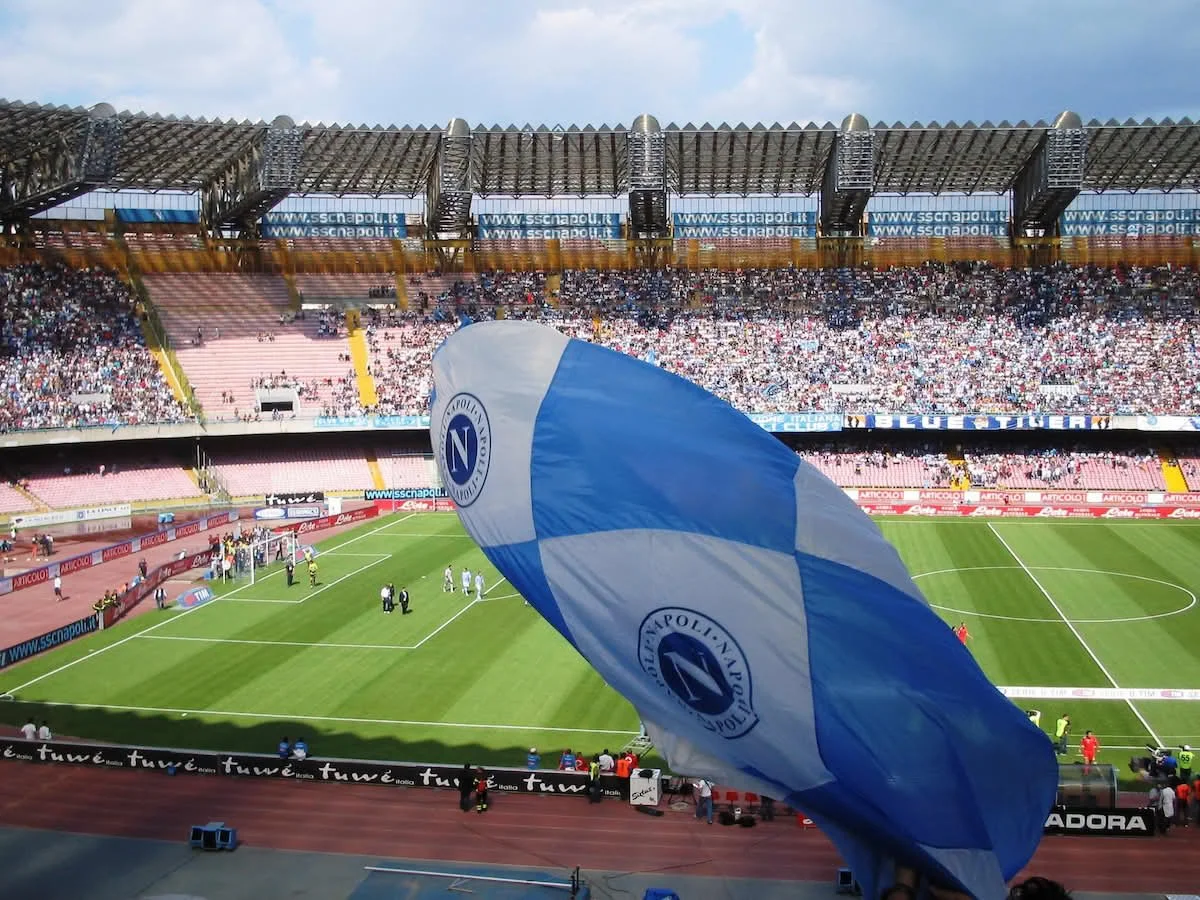
Moving Country Means More Than Moving Club…
Ryba, Stambulova and Ronkainen's (2016) Cultural Transition Model offers a useful way of understanding what happens when athletes relocate into a different cultural environment.
Rather than treating adaptation as simply “settling in,” their model describes cultural transition as ongoing psychological work involving three interconnected processes: social repositioning, negotiating cultural practices and meaning reconstruction.
Put into footballing terms, a player arriving abroad faces three deceptively simple questions:
Where do I belong here?
How do things work here?
Who can I become here?
Look at the experiences of British players abroad and those questions appear repeatedly.
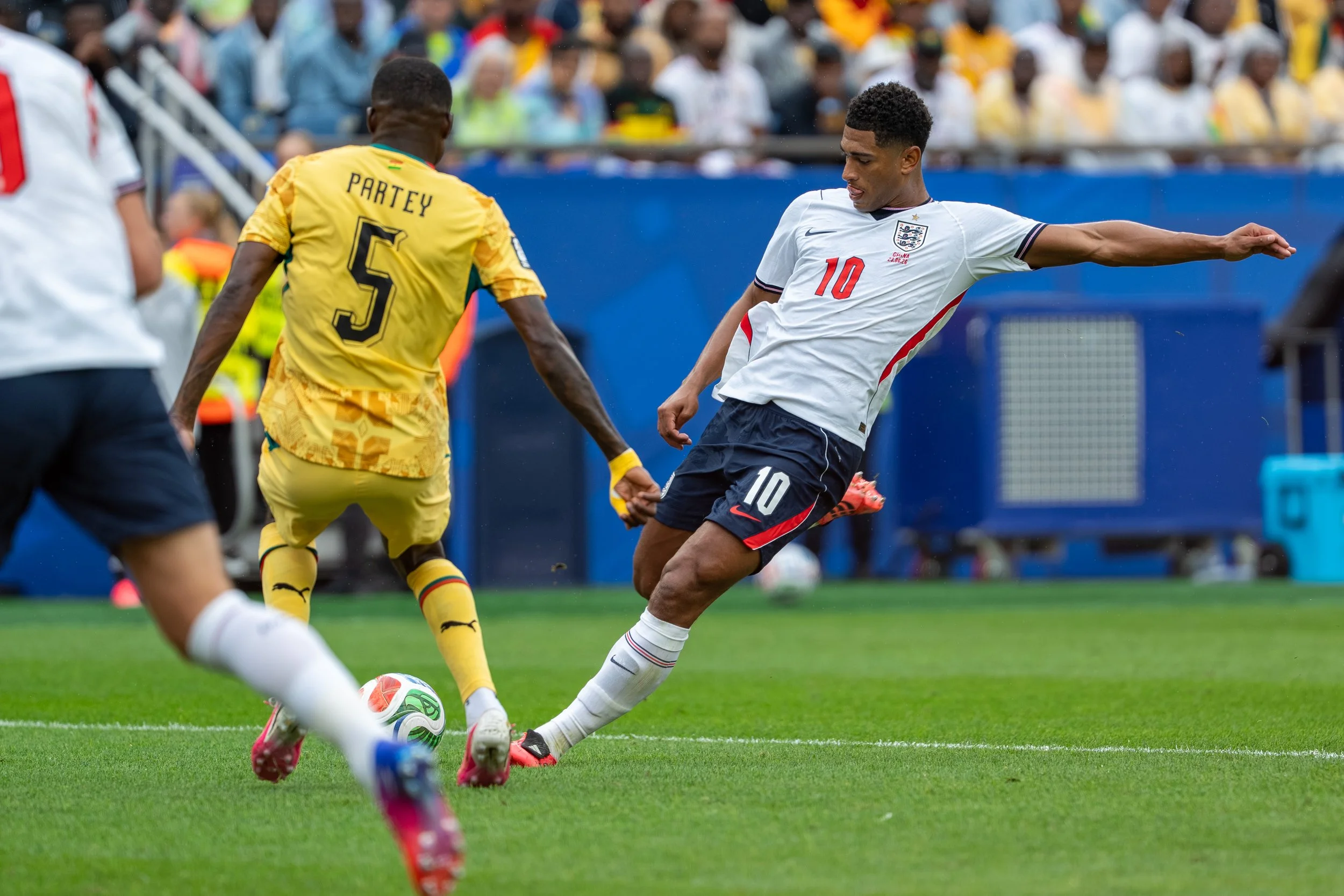
Bryan Berlin / WikiPortraits
Finding your Place: Social Repositioning
Jude Bellingham was 17 when we arrived at Borussia Dortmund.
Coveted by many of Europe’s top clubs, including those at home in England, Jude chose to move overseas to one of Europe’s premier talent development hubs.
He quickly went from Championship football to Champions League football. Sharing the dressing room with world class international players. All whilst adapting to a new country and culture.
Ryba and colleague describe social repositioning as part of the work athletes undertake during cultural transition. Existing relationships and social positions are disrupted and new ones have to be established.
Bellingham's experience illustrates how important the environment around the athlete can become.
His mother initially lived with him in Dortmund. Fellow countryman Jadon Sancho provided a “transition role model” of sorts, giving vicarious experience of how one can thrive when moving overseas. More importantly, Bellingham described Dortmund as exceptional at integrating young players, highlighting the individual support available to help them review performances and establish themselves in the first team.
The lesson from this?
Yes, moving abroad can show significant independence, but this doesn’t have to mean isolation.
Having a solid support network may be the very thing that allows for independence to develop at a stable, helpful, rate.
That makes the social environment surrounding a transfer worth examining.
Who moves with the player?
Who speaks their language?
Who helps them navigate the club?
Is there someone who has experienced the transition before?
The presence of compatriots doesn't guarantee successful adaptation. But familiar relationships can potentially provide stability while unfamiliar ones are being built.
And eventually, belonging has to extend beyond familiarity.
The objective isn't simply to find people from home. It's to develop a place within the new group.
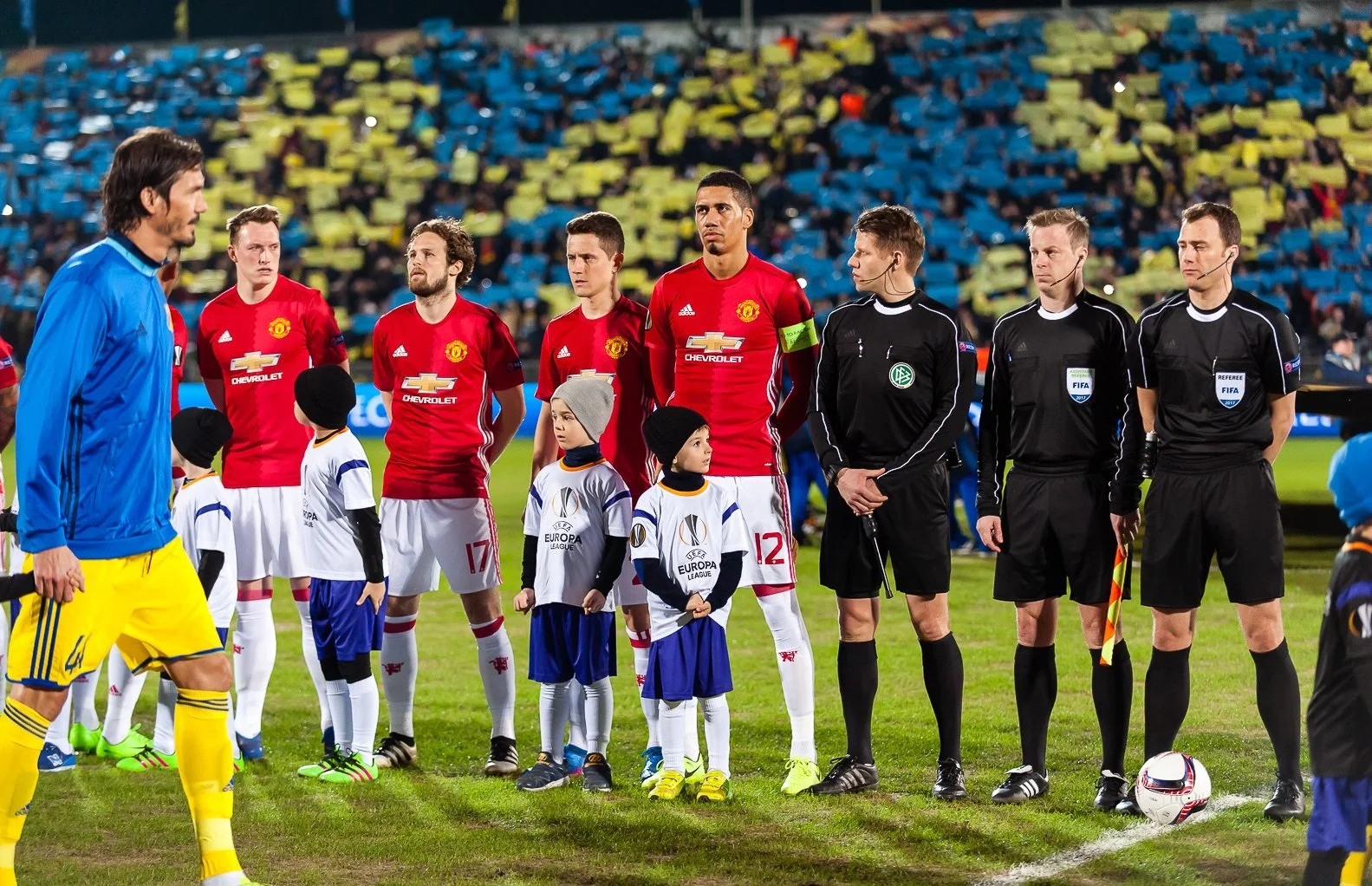
Светлана Бекетова Подробнее: http://www.soccer.ru/galery/966142/photo/619944, CC BY-SA 3.0 GFDL, via Wikimedia Commons
How Does Football Work Here? Negotiating Cultural Practices
Belonging is one key, but understanding how the new environment works is another.
Language is the obvious example… but language is more complex than learning words. Truly understanding the culture requires understanding how coaches communicate (verbally, non-verbally, where, when…), how teammates interact (what is “banter” over here?), tactical expectations, training practices, food, hierachy, recovery, everyday routines, cultural norms beyond the training ground…
Chris Smalling spoke to this following his move to Roma from Manchester United.
The adaptation occurred simultaneously on and off the pitch.
Away from the pitch, Smalling learnt Italian daily, with a focus on football terminology, but Roma also helped to manage this transition. Teammates and staff spoke English, a translator was available and the club assisted with life off the pitch.
On the pitch, Smalling speaks of learning another new language, the language of defending in Italy, experiencing different tactical situations than those he was familiar with in England.
Perhaps one of the most critical factors to supporting this successful transition? Paulo Fonseca, Roma’s manager, made it clear to Smalling about how his characteristics benefitted his tactical approach. Paired with all of the above, Smalling felt wanted.
He was doing his best to adapt to Roma, whilst Roma was doing their best to identify how their environment could work for him.
The outcome? Both player and club understand how one another works and what they need to thrive. Overtime, the ideal is the player understands the system, feels valued, and settles within their newly familiar surroundings.

Brad Tutterow, CC BY 2.0 <https://creativecommons.org/licenses/by/2.0>, via Wikimedia Commons
An Opportunity for Evolution: Meaning Reconstruction
Eventually, the cultural transition brings up a deeper question…
“Who am I in this environment?”
Let’s go back and look at McTominay.
At Manchester United, his football identity developed over decades, from academy player to graduate to first team player. In Manchester, McTominay was generally viewed as a rotational player, never someone fans seriously viewed as one of the team’s cornerstone players, but someone they knew they could depend on (at least, that was the general narrative).
Moving to Napoli shifted that.
Conte wanted McTominay specifically. He wasn’t the academy graduate and club player anymore, he was here to help Conte and Napoli win the Scudetto.
McTominay notes how this filled him with confidence.
A manager that had a role for him, saw his strengths and wanted to give him the stage to thrive.
That matters when considered through Ryba and colleagues idea of meaning reconstruction.
Moving abroad can require athletes to reconsider what their career means and who they understand themselves to be within it.
Smalling is another example.
Moving from Manchester United, where he had seen his role diminishing, to Roma where he was clearly valued and seen as a key figure.
Bellingham as well.
A shift of identity from Birmingham prospect to English wonderkid overseas. Dortmund gave him the stage to establish himself at the highest level.
Another, Harry Kane.
From Tottenham’s record goal scorer and leader, but no major trophies to his name, to performing at one of Europe’s premier trophy collectors Bayern Munich. Kane himself framed the move as a chance to experience a different league and culture rather than finish his career with regrets, and Bayern gave him the stage to add team success to an already exceptional individual career.
The player hasn’t changed in any of these examples. Yes, they may have developed on several fronts through exposure to new training and other factors, but the primary shift is the environment and the identity they have for themselves.
The environment may simply allow a different version of them to emerge.

Anish Morarji from St Albans, England, CC BY 2.0 <https://creativecommons.org/licenses/by/2.0>, via Wikimedia Commons
What Actually Counts as a Successful Transition?
This is where British football's history abroad becomes particularly interesting…
Gareth Bale won five Champions Leagues with Real Madrid.
By almost any conventional footballing measure, his move was extraordinarily successful.
Yet when you hear of Bale's relationship with Spanish culture, language, supporters and the Madrid environment throughout his time there….
The reality was more nuanced than simply a resounding success.
Bale was taking Spanish lessons early in his Madrid career and talked positively about life in the city; he also said that learning a different style of football in Spain had improved his game.
This raises an important distinction.
Sporting adaptation and cultural adaptation aren't necessarily the same thing.
Take Michael Owen too…
His Real Madrid move lasted only one season and is rarely remembered among the great British success stories abroad. Yet describing him as simply having “failed in Spain” ignores a respectable individual scoring record and intense competition for selection.
Jonathan Woodgate is more problematic still. Injury dramatically restricted his ability to establish any continuity in Madrid.
Those examples warn against a seductive psychological explanation:
Bellingham succeeded because he had the right mentality. Woodgate didn't.
There is little justification for making such an overly simplistic conclusion.
Transitions take place within circumstances. Injury, opportunity, coaching, family, language, teammates, timing and simple luck can all affect what happens next.
Successful cultural transition isn't evidence of superior character. It emerges from an interaction between the person and their environment.
So, What Makes a Move Abroad Work?
Across the cases discussed, certain themes begin to emerge…
Preparation: Understanding what you are moving towards seems to reduce some of the uncertainty involved.
Relationships: Family, teammates, coaches, club staff and even past players who have made similar moves can all provide various levels of support (informational, emotional, tangible and esteem).
Cultural engagement: Learning the language, embracing the norms and learning what makes the new nation tick.
Opportunity: A good chance to show one’s ability on the pitch and establish a sense of competence and status.
Trust: Perhaps one of the most pivotal factors, not just for transitions, but for all of sport. Feeling as though the club, manager and teammates have faith in you and your abilities, and trusting that they will be there to offer support, even in times of hardship.
Flexibility: The moving player needs to be open to change and the new club needs to be open to adapting to the moving player, providing additional support as necessary.
Now, this is not a set check list that will guarantee success. But, they do demonstrate perhaps the key take away…
Successful adaptation is something that athletes and environments construct together.

Bryan Berlin / WikiPortraits
The Next Generation
That's worth remembering when the next English prospect leaves for Dortmund, Madrid, Milan or somewhere less familiar. As we have seen this summer, with the likes of John Stones and Djed Spence joining Inter Milan, Reigan Heskey joining Cologne and Anthony Gordon joining Barcelona…
The immediate conversation will inevitably focus on football.
Will he start?
Does the league suit him?
Is he good enough?
Cultural-transition research encourages us to ask different questions.
Who helps the player establish belonging?
How does he engage with the language and culture?
How does the club communicate with him?
Does the coaching environment recognise his existing strengths?
How does his role within the dressing room develop?
And perhaps most interestingly:
Who does he become through the experience of leaving home?
Because Bellingham, McTominay and Smalling didn't simply demonstrate that British footballers can succeed abroad.
Their experiences illustrate how much has to happen around the football itself.
A transfer changes where a footballer plays. A cultural transition can change where they belong, how they operate and even who they understand themselves to be.
Talent can travel overnight.
Belonging has to be built.
I hope this piece has provided an interesting point of reflection. Athlete cultural transitions are a complex interplay between individual and social psychology. One’s beliefs can shape their experiences and their experiences shape their beliefs. Success is rarely on one party, but rather how both parties adapt to one another and create the conditions for success, meeting one another’s needs.
Ultimately, moving overseas provides more than just a change of football scenery, it is a life journey for athletes, families and clubs. In this article, I have hardly discussed the family factors at play, but undoubtedly this is another area to consider!
As always, thank you for reading, have a great week…
Frazer
References
Ryba, T. V., Stambulova, N. B., & Ronkainen, N. J. (2016). The work of cultural transition: An emerging model. Frontiers in Psychology, 7, 427.
Stambulova, N. B. (2003). Symptoms of a crisis-transition: A grounded theory study. In N. Hassmén (Ed.), SIPF Yearbook 2003 (pp. 97–109). Örebro University Press.
Stambulova, N., Alfermann, D., Statler, T., & Côté, J. (2009). ISSP position stand: Career development and transitions of athletes. International Journal of Sport and Exercise Psychology, 7(4), 395–412.
Rees, T., & Hardy, L. (2000). An investigation of the social support experiences of high-level sports performers. The Sport Psychologist, 14(4), 327–347.
Rees, T., Hardy, L., & Freeman, P. (2007). Stressors, social support, and effects upon performance in golf. Journal of Sports Sciences, 25(1), 33–42.
Schinke, R. J., McGannon, K. R., Battochio, R. C., & Wells, G. D. (2013). Acculturation in elite sport: A thematic analysis of immigrant athletes and coaches. Journal of Sports Sciences, 31(15), 1676–1686.
Football examples: Contemporary interviews and reporting covering the overseas transitions of Jude Bellingham, Scott McTominay, Chris Smalling and other British players including Gareth Bale, Michael Owen and Jonathan Woodgate. Psychological themes are evidence-informed interpretations rather than claims about individual players’ internal experiences.
