

10 Takeaways from the NFL Weeks 1 to 3
The NFL is back and offering up some great performance psychology take aways.
Upsets, big plays and hard hits, the NFL is all action at the pinnacle of one of the most intense sports on the planet.
In this blog post I note 10 of the take aways I have had from the first three weeks.
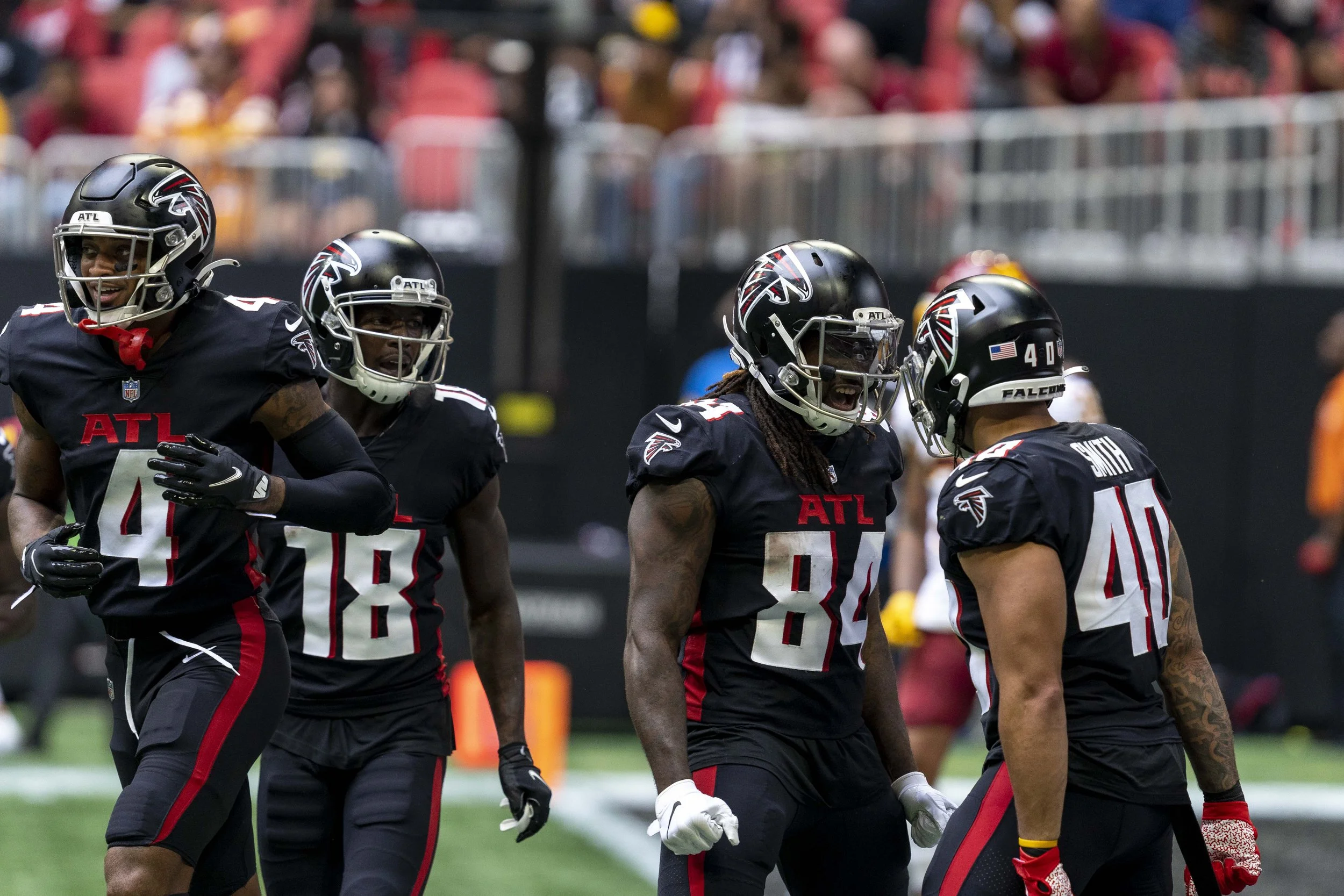
All-Pro Reels — Washington Football Team at Atlanta Falcons from Mercedes Benz Stadium, Atlanta, GA October 3rd, 2021 (All-Pro Reels Photography)
Week 3: Flow, Confidence and Holding Your Nerve…
Drake Maye: A Strength Overplayed?
Maye struggled against Jacksonville, turning the ball over three times before being benched late in the 35–6 defeat. His ability to make something happen is normally a strength, but it appeared to become overplayed. Rather than accepting the sack, throwing the ball away or living to fight another down, he repeatedly tried to force opportunities. Maye acknowledged one interception came from trying to give his receiver a chance, while Mike Vrabel noted that sometimes you can “want it too badly” and force things.
TAKEAWAY: Under pressure, we can become so focused on avoiding a mistake that we make a bigger one. The appetite for risk may be a strength... but when a situation calls for restraint, the skill is knowing when to hold back. Sometimes performance means accepting a small loss rather than chasing a big win.
Chicago Bears: Set the Conditions for Success…
Chicago entered Week 3 without Caleb Williams, with 38-year-old Case Keenum stepping in against the Eagles. The result? A convincing 27–7 win. One interesting factor: Ben Johnson eased Keenum into the game with some familiar, relatively simple plays. The Bears' opening drive ended in a touchdown, with Keenum completing 5/6 passes. Was Keenum in “flow”? We can't know from watching the game. But research has linked confidence and perceived competence with flow experiences. So perhaps those early successful actions helped Keenum settle, build confidence and find his rhythm.
TAKEAWAY: You don't always need to go all-out from minute one. Early success can help you settle and build momentum. Sometimes, finding your rhythm first is what unlocks your best performance later.
Todd Monken: Sticking to Your Guns…
Monken chose Watson over Shedeur Sanders after assessing the entire offseason, training camp and preseason, saying Watson gave Cleveland the best chance to move the ball and score. He said it wasn't a week-to-week decision. Watson then followed up a difficult Week 1 with a much more efficient Week 2: 24/30, 238 yards, no turnovers and a 121.9 passer rating in Cleveland's comeback win and a win this week against the Panthers.
TAKEAWAY: Good decision-making isn't about never changing your mind. It's knowing when changing course is warranted... and when consistency gives someone the opportunity to actually develop within the system. This takes belief, patience and bravery to back your judgement, even when others may not fully understand.
Washington Commanders: The Underdog Needs Belief and Process…
Washington entered 0–2, lost Jayden Daniels to injury, and then beat the defending champion Seahawks 33–31 with Mariota throwing three TDs. But this wasn't simply an inferior team getting lucky: Washington generated three takeaways, held Seattle to 44 rushing yards, and Mariota spread the ball to nine different receivers.
TAKEAWAY: The underdog advantage only matters if you believe you can win... and have a process that gives that belief somewhere to go. Reduced expectations can lower pressure, while belief + preparation + role clarity can create a powerful motivational cocktail. The opportunity to be heroic is useful; but the systems and skills to execute is what makes it real.
Week 2: Decisions, Clutch and Taking Ownership…
Washington Commanders: It’s Always More Than One Decision…
The criticism around Dan Quinn's decisions against Dallas is a good reminder of how quickly performance gets reduced to a single moment: “That was the wrong call.” But decisions sit inside a sequence... game state, previous plays, information available, decision, play call, execution and opponent response. Even Daniels' injury wasn't a simple consequence of one decision: he was injured on the final play of the half after a teammate stepped on his foot. Good performance analysis looks at the whole chain, not just the moment we can point to afterwards.
TAKEAWAY: Don’t attach blame for performance outcomes to one decision alone. There is always a chain of decisions to explore and unpack to get the full story.
Tyler Shough: Can he Manage the Changing Narrative?
Tyler Shough has now shown he can perform when chasing a game. He helped the Saints fight back from 21 points down against Detroit, then led another fourth-quarter comeback against Baltimore. But Swann's Integrative Model of Optimal Performance States reminds us that clutch isn't simply “playing well”, it can involve heightened concentration, effort and awareness under pressure, distinct from the more effortless experience of flow. So far, Shough has been the underdog chasing. What happens when the Saints' narrative changes, expectations rise, and he's the one being chased? Can he access the same behaviours when the pressure comes from protecting a lead rather than chasing one?
TAKEAWAY: Clutch when chasing is one thing… clutch when you are protecting a lead is a different experience. The best are able to hold their nerve in both situations.
Sean McVay: Taking Ownership as a Leader…
After the Rams' loss to San Francisco, Sean McVay looked inward and publicly took responsibility for his role in the result, including questioning the team's preparation and travel. That doesn't mean leaders should take the blame for everything. But taking ownership publicly can send a powerful message: “I will carry this, and I still believe in you.” It can protect the team from a blame culture and create space to focus on learning rather than defending themselves.
TAKEAWAY: Sometimes leadership is about taking the weight so your team can get back to work and don’t dwell on the mistakes of last week.
Week 1: Charisma, Preparation and Managing Emotions
New York Giants: Charisma Needs Substance to Back it up…
Dart, Skattebo and Nabers have quickly given the Giants a new personality... but charisma alone doesn't create a winning identity. Beneath the headlines is a strong offensive line, an emerging run game and a defence capable of making big plays. That combination matters psychologically: when a team has clarity around who they are and how they want to play, individual personalities can amplify that identity rather than having to carry it. This reflects research around team cohesion and collective efficacy: belief is strengthened when people see evidence that the group can actually deliver on its shared identity.
TAKEAWAY: Charisma can create energy. A clear, credible identity turns that energy into belief.
Quarterback’s: Trevor Lawrence and Josh Allen - Preparing for the Imperfect…
NFL games are often decided by inches... and Week 1 provided two brilliant examples. Lawrence and Allen both produced high-difficulty throws through incredibly tight windows when the outcome was still in the balance. At this level, the difference isn't simply technical ability; it's the ability to access that skill under pressure, with limited time and incomplete information. Expert-performance research highlights the importance of deliberate practice and perceptual-cognitive skill: repetition builds responses that remain accessible when conscious processing is overloaded.
TAKEAWAY: Don't just practise the perfect scenario. Practise until the right response is available when the scenario isn't perfect.
Sean Peyton: Feeling the Frustration, Not Letting it Dictate the Action…
Watching someone you trust struggle can trigger an immediate urge to intervene. Sean Payton has handed play-calling responsibility to Davis Webb, only to watch Denver's offence struggle against Kansas City. Payton openly acknowledged his frustration... but rather than allowing the emotion to dictate his response, he emphasised reviewing the performance and understanding to change. This is a useful distinction: emotional regulation doesn't mean removing emotion; it means creating enough space between what you feel and what you do next.
TAKEAWAY: Good leadership isn't the absence of frustration. It's the ability to feel it without letting it make the decision.
Overall, some interesting take aways to reflect on.
Thank you for reading and as always… Have a great week!
Frazer
References:
Bandura, A. (2000). Exercise of human agency through collective efficacy. Current Directions in Psychological Science, 9(3), 75–78.
Carron, A. V., Eys, M. A., & Burke, S. M. (2007). Team cohesion: Nature, correlates, and development. In S. Jowett & D. Lavallee (Eds.), Social Psychology in Sport. Human Kinetics.
Ericsson, K. A., Krampe, R. T., & Tesch-Römer, C. (1993). The role of deliberate practice in the acquisition of expert performance. Psychological Review, 100(3), 363–406.
Macnamara, B. N., & Maitra, M. (2019). The role of deliberate practice in expert performance: Revisiting Ericsson, Krampe & Tesch-Römer (1993). Royal Society Open Science, 6, 190327.
Gross, J. J. (1998). The emerging field of emotion regulation: An integrative review. Review of General Psychology, 2(3), 271–299.
Gross, J. J. (1998). Antecedent- and response-focused emotion regulation: Divergent consequences for experience, expression, and physiology. Journal of Personality and Social Psychology, 74(1), 224–237.
Jones, M. V., Meijen, C., McCarthy, P. J., & Sheffield, D. (2009). A theory of challenge and threat states in athletes. International Review of Sport and Exercise Psychology, 2(2), 161–180.
Mesagno, C., & Beckmann, J. (2017). Choking under pressure: Theoretical models and interventions. Current Opinion in Psychology, 16, 170–175.
Englert, C. (2017). Ego depletion in sports: Highlighting the importance of self-control strength for high-level sport performance. Current Opinion in Psychology, 16, 1–5.
Nicholls, A. R., Polman, R. C. J., & Levy, A. R. (2012). A path analysis of stress appraisals, coping, and coping effectiveness among athletes. Psychology of Sport and Exercise, 13(3), 263–273.
Swann, C., Keegan, R. J., Piggott, D., & Schweickle, M. J. (2017). A systematic review of the experience, occurrence, and controllability of flow in elite sport. Psychology of Sport and Exercise, 30, 1–14.
Swann, C., Jackman, P. C., Schweickle, M. J., & Vella, S. A. (2019). Optimal experiences in sport: An improved definition and model. Psychology of Sport and Exercise, 45, 101550.
Swann, C., Crust, L., Vella, S. A., Allen, S., Appleton, P. R., Beauchamp, M. R., et al. (2017). Performing under pressure: Exploring the psychological state of clutch performance in sport. Journal of Sports Sciences, 35(23), 2272–2280.
Cooke, A., Kavussanu, M., McIntyre, D., & Ring, C. (2011). Effects of competition on endurance performance and the underlying psychological and physiological mechanisms. Psychophysiology, 48(9), 1286–1296.
Fletcher, D., & Wagstaff, C. R. D. (2009). Organizational psychology in sport: A review. Journal of Sports Sciences, 27(7), 801–815.
