

3 Performance Psychology Storylines: LA LIGA 2026/27
The 2026/27 La Liga season kicked off this past weekend. Tonight, Atletico Madrid take on newly promoted Malaga at the Metropolitano, and this weekend we will see the first matches for Real Madrid and Barcelona.
It promises to be another fascinating season, with plenty of new faces — and some returning ones — both on the pitch and in the dugout.
Rodri is now in Catalonia with Barcelona. Anthony Gordon will also be looking to etch his name into the history books with the Catalan giants. Diomande joins Real Madrid hoping to establish himself in an all-star forward line. Three newly promoted clubs with storied top-flight histories return to La Liga. Simeone leads a new-look Atlético Madrid…
And, perhaps most fascinating of all, José Mourinho “The Special One” is back at the Bernabéu.
There will be plenty to analyse tactically over the coming months. But, as ever, I'm just as fascinated by what will be happening inside the minds of the players, coaches and teams involved.
What performance psychology principles will we see in action? How might they show up across a 38-game season? And, ultimately, how could they help shape the way the league plays out?
Here are three storylines I'll be paying particularly close attention to…
Wikimedia Commons/ Wikimedia Commons, CC BY-SA
The Special One 2: Evolution
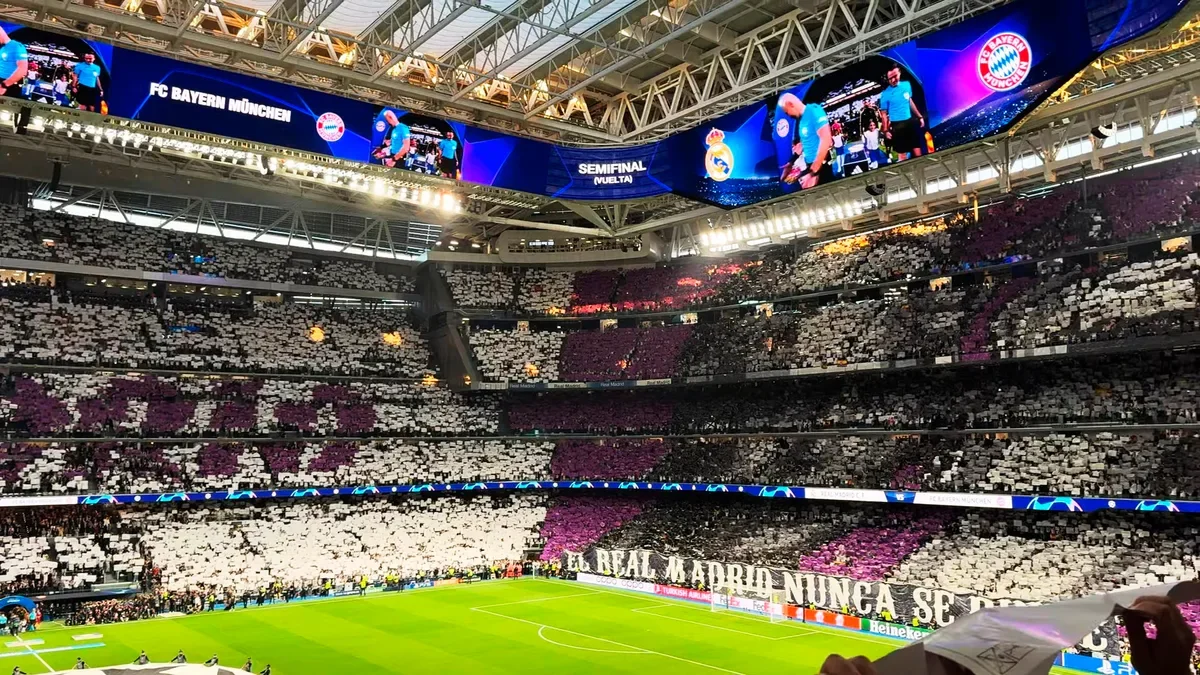
Mourinho returns to Real Madrid after 13 years away… but both club and manager are now vastly different.
Madrid’s squad has undergone another major overhaul. Yann Diomande arrives for over £100 million, Cucurella fresh from winning the World Cup with Spain — complete with De la Fuente tattoo — while Bernardo Silva, Konaté, Espi and Dumfries have also joined.
Yet since his unveiling, Mourinho has been remarkably complimentary of what he already has. He has spoken about trusting the squad, not needing further signings and wanting to develop the players available to him.
From a performance psychology perspective, that’s where things get interesting.
Mourinho has always been brilliant at creating strong team identities. At his best, his passion, transparency and humour create incredibly cohesive groups. Players know what they’re fighting for, who they’re fighting alongside and, perhaps most importantly, who they’re fighting against.
His reputation probably helps too.
Imagine being a young player who grew up watching Ronaldo, Drogba, Eto’o, Ibrahimović and Lampard. Now the manager who worked with those players is telling you what he believes it takes to reach that level. His previous success provides credibility before the relationship has even begun.
But the characteristics that make Mourinho so effective can also create problems.
Transparency can become confrontation. High standards can become excessive demands. Passion can become volatility. A powerful “us against them” identity can become divisive.
That's why I'm less interested in Mourinho's opening press conferences than in what happens when Madrid inevitably hit difficulty.
What should we watch for?
Leadership research suggests there isn't one universally effective coaching style. What matters considerably is the fit between the leader, the athletes and the environment.
Recent Madrid history provides an interesting example.
Under Carlo Ancelotti, senior players have described considerable trust, tactical flexibility and player responsibility. It worked spectacularly well. Under Xabi Alonso, the environment reportedly became more structured, with stricter expectations and less perceived freedom. Despite Alonso arriving after extraordinary success with Bayer Leverkusen, the fit seemingly never worked in the same way.
That doesn't necessarily mean Ancelotti's approach was right and Alonso's was wrong.
The more interesting question is why one environment appeared to get such strong buy-in from this group and another didn't.
Research around the coach–athlete relationship and Self-Determination Theory gives us a useful lens here. Athletes tend to function well in environments where they experience competence, connection and some sense of autonomy. That doesn't mean giving players complete freedom or removing demanding standards. Autonomy-supportive coaching can still involve clear expectations, difficult feedback and accountability. The difference is whether athletes feel they have some ownership over what they're being asked to do.
And that brings us back to Mourinho.
Which José turns up when things get difficult?
Does he impose strict rules and a clearly defined tactical philosophy? Or does he recognise the experience within the dressing room and give players greater responsibility?
Can he retain the demanding standards that have defined his career while giving this particular group enough freedom to thrive?
And perhaps most interestingly: how will he respond when players don't immediately buy in?
Mourinho has undoubtedly evolved through Manchester United, Tottenham, Roma, Fenerbahçe, Benfica and everything that came with those experiences. But we've also continued to see glimpses of the outspoken, emotional and combative José.
So the psychology storyline isn't simply whether Mourinho 2.0 is softer than Mourinho 1.0.
It's whether one of football's great leaders can do something that is incredibly difficult for any leader:
keep the qualities that made you successful, while adapting the way you deliver them to the people standing in front of you now.
Börkur Sigurbjörnsson from Barcelona, CC BY 2.0 <https://creativecommons.org/licenses/by/2.0>, via Wikimedia Commons
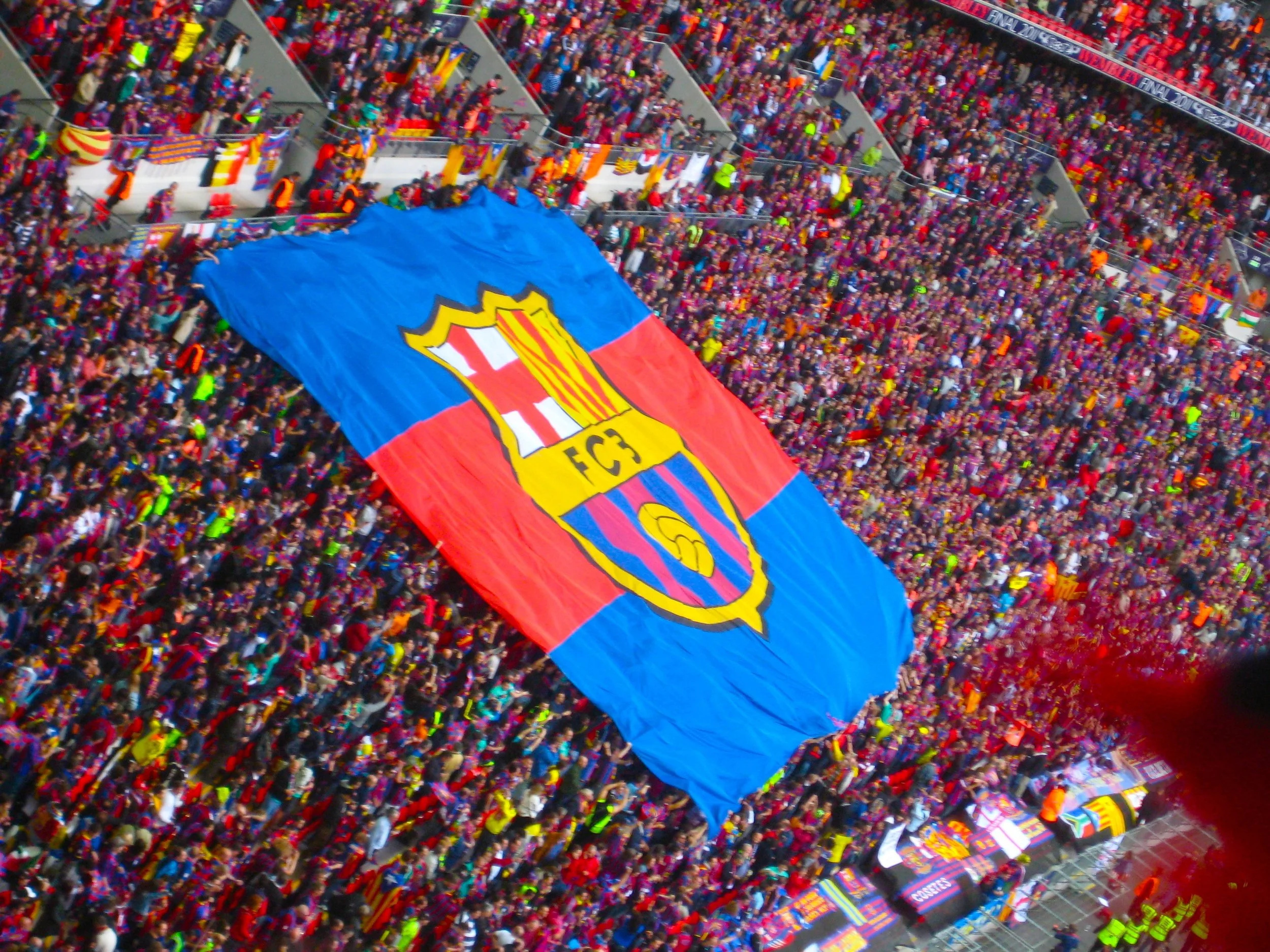
Anthony Gordon: From Tyneside to Catalonia
Anthony Gordon arrives at Barcelona off the back of a mixed World Cup, but several highly successful seasons at club level. Coveted by some of Europe’s biggest clubs, Barcelona clearly see something they like too — spending around £80 million to bring him to Catalonia.
And Gordon appears to have plenty of the building blocks required to make the move work. Alongside his physical and technical qualities, he has previously shown a willingness to learn, take on challenges and develop the psychological side of his game.
But the interesting question from a performance psychology perspective is:
How does Gordon adapt when being an excellent player might not guarantee that you play?
He joins a Barcelona attack already containing Raphinha and Lamine Yamal. Raphinha is coming off an exceptional campaign and has become one of the team's core leaders. Gordon may therefore arrive knowing that he won't necessarily start every week — perhaps instead providing a game-changing option from the bench and elite rotation across multiple positions.
Then there's the background noise.
Barcelona chose Gordon rather than making Marcus Rashford's time in Catalonia permanent, despite Rashford performing well during his spell there. Add an £80 million price tag and expectations inevitably follow.
Suddenly, Gordon isn't simply playing football.
There is the potential for every appearance to become an opportunity to justify the fee, justify the decision and earn the next start.
And that's before considering the broader transition: a new country, language and culture; a German coach; a multicultural dressing room; different tactical demands and one of football's most scrutinised environments.
Quite a change from rainy mornings on Tyneside.
What should we watch for?
The first thing is how Gordon responds to his role.
Achievement Goal Theory gives us a useful lens. If success becomes primarily comparative — Am I starting ahead of Raphinha? How many goals does Yamal have? Why did he play 90 minutes and I played 20? — then confidence and motivation can become increasingly dependent on selection and comparison.
A more task-focused approach gives Gordon something different to chase: Am I learning the system? Am I improving? Am I executing my role? Am I helping the team when the opportunity comes?
That doesn't mean he shouldn't want to start. Elite athletes are competitive. The interesting part is whether three outstanding wide players can compete with each other without that becoming competition against each other.
Flick's role could be crucial. Clear expectations around selection, good communication and a sense that each player has a meaningful role can help create an environment where rotation feels like part of the plan rather than evidence that the manager doesn't trust you.
Then watch what happens when Gordon actually gets his opportunities.
A substitute appearance with 20 minutes remaining could be framed as:
“Here's my chance to impact the game.”
Or:
“I have 20 minutes to prove I should be starting.”
Those sound similar, but psychologically they can create very different experiences.
Challenge–threat research suggests that pressure is partly shaped by how performers evaluate the demands of a situation relative to the resources they believe they have to meet them. If every start begins to feel like “I have to perform today or I'm back on the bench”, attention can become increasingly occupied by the consequences of performance rather than performance itself. Threat states have been associated with less efficient physiological responses, disrupted attention and poorer execution.
Reduced minutes could create another challenge.
Match experience provides athletes with opportunities to accumulate evidence of competence: beating a defender, creating a goal, executing a tactical role, combining successfully with teammates. It also creates the shared experiences through which relationships and understanding develop.
So don't just watch Gordon's goals and assists.
Watch his interviews and body language after being left out. Watch how Flick communicates his role. Watch his relationships with Raphinha and Yamal. Watch whether he appears increasingly connected with teammates as the season develops. And watch how he performs when an opportunity suddenly arrives after several games on the bench.
Because Gordon's first season at Barcelona might tell us something interesting about elite performance:
Sometimes the psychological challenge isn't proving that you're good enough. It's continuing to develop, contribute and trust your ability when you're surrounded by other players who are good enough too.
Javi Arquimbau / Eden Comunicación https://flic.kr/p/amVoiL
Santander, Coruna, Malaga: The Return of the Old Guard
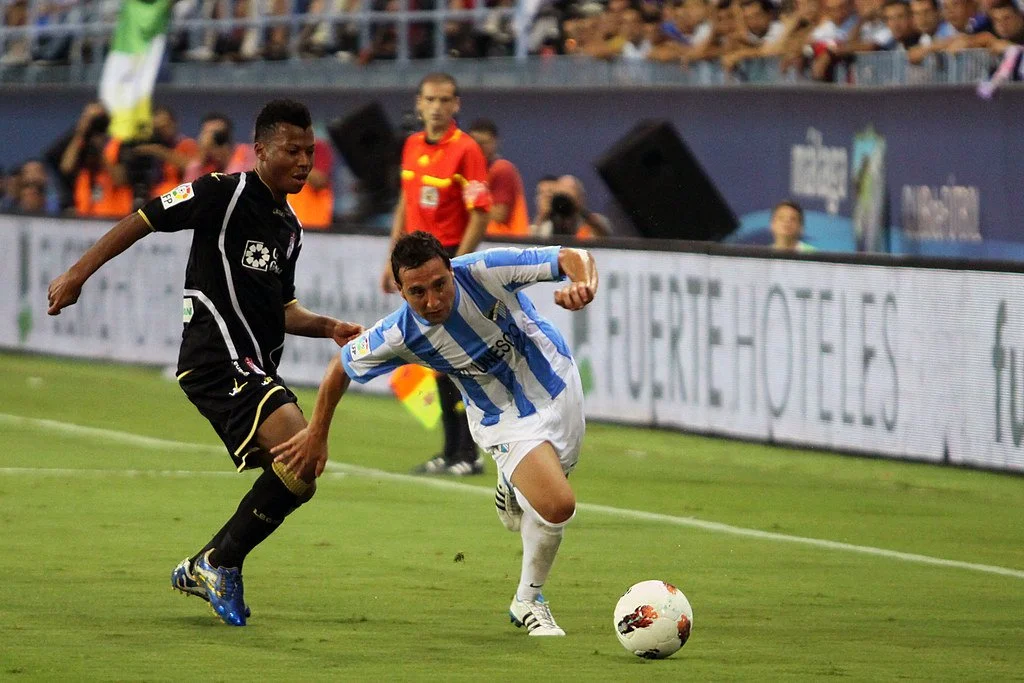
The return of Racing Santander, Deportivo La Coruña and Málaga comes with plenty of nostalgia.
Racing were one of the original ten teams in Spain's top flight. Deportivo famously won La Liga in 1999/2000. Málaga produced one of Spanish football's great European runs, reaching the Champions League quarter-finals in 2013 before that dramatic defeat to Borussia Dortmund.
Since then, all three have experienced turbulent periods, including spells in Spain's third tier. Now they're back, with the immediate goal likely much simpler than recreating past glories:
Stay there.
Despite their history, there doesn't appear to be huge expectation surrounding any of the three. If anything, there seems to be a sense of opportunity and excitement around simply being back.
Psychologically, that could be useful.
Challenge–threat theory suggests that demanding situations are more likely to be experienced as a challenge when we believe our resources are sufficient to meet the demands in front of us. Low expectations don't guarantee a challenge state, but they can change what feels at stake.
Early in the season, a game against Barcelona or Real Madrid might feel like an opportunity: Let's see what we can do.
But expectations aren't static.
If one of these teams starts well, does that freedom gradually become something they feel they need to protect? Does “let's see what happens” become “we can't throw this away”?
Equally, if a team starts badly, what happens then? Do the shackles come off because there's increasingly little to lose? Does anxiety increase as relegation becomes more tangible? Or do managers, boards and players abandon the approach that earned promotion in search of short-term results?
The same team can experience the same challenge very differently depending on what they believe is at stake.
What should we watch for?
The first clue may be how these teams actually play.
Málaga provide a fascinating early test against Atlético Madrid. Under Juanfran Funes last season, they developed an identity characterised by bravery in possession and aggressive pressing. They could also absorb pressure and attack quickly in transition when games demanded it.
What happens when that approach meets significantly better opposition?
Do Málaga continue taking risks because that's what got them here? Or does the possibility of being punished encourage them to become increasingly conservative?
Importantly, defensive football doesn't automatically mean fearful football.
Some teams genuinely embrace being the underdog. They defend aggressively, celebrate blocks, attack transitions together and seem to enjoy frustrating technically superior opposition. Sitting deep is their strategy.
Another team can occupy exactly the same tactical shape but look completely different: hesitant on the ball, slow to break forward and increasingly afraid of making the mistake that costs them the game.
The formation might look the same. The psychology underneath it can be completely different.
Then watch the stands.
All three clubs have fanbases capable of making home games extremely difficult for opponents. At the moment, simply being back gives supporters plenty to celebrate.
But what happens when expectations move?
A good start might create belief — but it might also quickly redefine what supporters consider acceptable. A bad run might produce defiance and greater support, or gradually turn excitement into frustration.
Research on home advantage suggests crowds can influence players, officials and the emotional environment surrounding competition. But home isn't automatically advantageous simply because your own supporters are there.
When the crowd believes with you, home can feel like somewhere you're difficult to beat. When expectation turns into anxiety, the same stadium can start feeling like somewhere you're afraid to lose.
That might be the most interesting psychological storyline for all three clubs:
Can they retain the freedom and excitement of finally being back when staying there starts to really matter?
So, as much as there are no clear answers as to how these storylines will unfold, there is certainly much to observe and be curious about.
José in particular is truly fascinating, but for me personally, I cannot wait to follow Malaga’s return to the top flight. The Anadulsian side have a special place in my heart having frequently been on holiday there and being fortunate enough to tour La Rosaleda.
Either way, it will be an exciting season for all!
Thank you for reading and have a great week,
Frazer
References:
Deci, E. L., & Ryan, R. M. (2000). The “what” and “why” of goal pursuits: Human needs and the self-determination of behavior. Psychological Inquiry, 11(4), 227–268.
Mageau, G. A., & Vallerand, R. J. (2003). The coach–athlete relationship: A motivational model. Journal of Sports Sciences, 21(11), 883–904.
Jowett, S., & Cockerill, I. M. (2003). Olympic medallists’ perspective of the athlete–coach relationship. Psychology of Sport and Exercise, 4(4), 313–331.
Nicholls, J. G. (1984). Achievement motivation: Conceptions of ability, subjective experience, task choice, and performance. Psychological Review, 91(3), 328–346.
Jones, M., Meijen, C., McCarthy, P. J., & Sheffield, D. (2009). A theory of challenge and threat states in athletes. International Review of Sport and Exercise Psychology, 2(2), 161–180.
Moore, L. J., Vine, S. J., Wilson, M. R., & Freeman, P. (2012). The effect of challenge and threat states on performance: An examination of potential mechanisms. Psychophysiology, 49(10), 1417–1425.
Ryba, T. V., Stambulova, N. B., & Ronkainen, N. J. (2016). The work of cultural transition: An emerging model. Frontiers in Psychology, 7, 427.
Carron, A. V., Colman, M. M., Wheeler, J., & Stevens, D. (2002). Cohesion and performance in sport: A meta-analysis. Journal of Sport & Exercise Psychology, 24(2), 168–188.
Jamieson, J. P. (2010). The home field advantage in athletics: A meta-analysis. Journal of Applied Social Psychology, 40(7), 1819–1848.
La Liga examples: Contemporary reporting, first-person comments and club features covering Mourinho’s return to Real Madrid and management of a rebuilt squad; Gordon’s move to Barcelona, competition for selection and adaptation to a new footballing culture; and Racing Santander, Deportivo La Coruña and Málaga returning to La Liga after lengthy spells away. Málaga’s tactical identity draws on Funes’ own descriptions of bravery in possession, aggressive pressing and adaptability in transition. Psychological themes are evidence-informed interpretations of these situations rather than claims about the internal experiences of the players, coaches or teams involved.
