

NBA 2026/27 Storylines: Minnesota, Morant and The New Look 76ers…
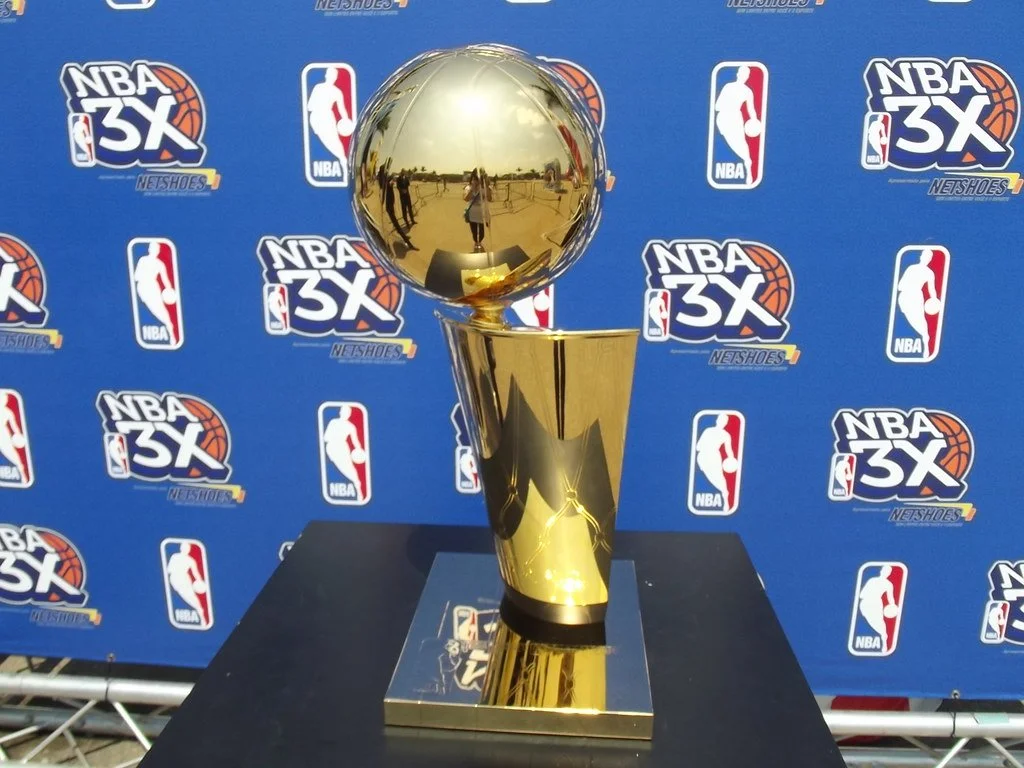
The NBA season is just around the corner… a new opportunity for teams to chase the famous Larry O’Brien trophy.
Stars have moved, new teams have formed and power has shifted somewhat from west to east…
Here are three of the key storylines I will be watching across the upcoming season…
Minnesota Timberwolves: “Moodiness to Giddiness”
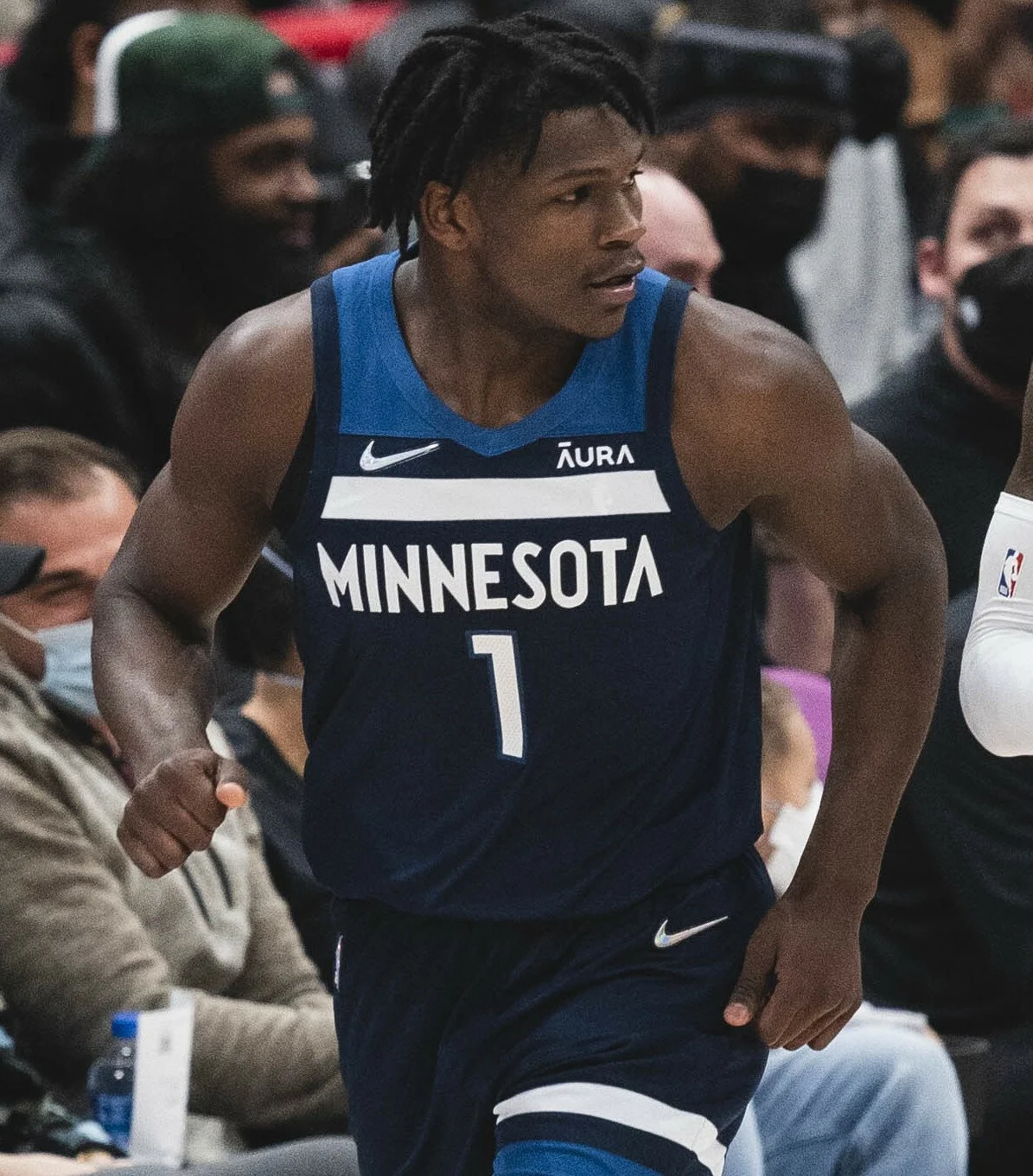
Timberwolves head coach Chris Finch has described the shift in Minnesota's mood with the phrase “traded moodiness for giddiness” following LaMelo Ball's arrival. Ball and Anthony Edwards are close friends, and their shared enthusiasm could help reshape the team's emotional culture.
On the surface, this looks like a story about two stars enjoying basketball. Psychologically, it raises a bigger question: can positive energy translate into better collective performance?
Social cohesion — how connected players feel — can support task cohesion, the shared commitment to achieving team goals. But enjoying each other's company is only part of the equation.
The Psychology:
Can positive chemistry survive the demands of winning?
Research on team cohesion suggests that social connection can support collective performance, particularly when it strengthens commitment to shared tasks. But chemistry isn't automatically coordination.
Watch for three things:
Sacrifice: Do Ant and LaMelo create opportunities for teammates, even when that means fewer touches or points for themselves?
Emotional contagion: Does their energy lift the wider group, including Rudy Gobert, Ayo Dosunmu and Jonathan Kuminga, or does it become a dynamic that revolves around the two stars?
Response to adversity: Does the joy remain when shots aren't falling, defensive rotations break down or roles become frustrating?
The performance takeaway: The goal isn't to be happy all the time. It's to build a team where positive emotion supports effort, trust and accountability — and where players can challenge each other without losing connection.
The key question: can they turn friendship into a shared competitive identity?
All-Pro Reels, CC BY-SA 2.0 <https://creativecommons.org/licenses/by-sa/2.0>, via Wikimedia Commons
Philadelphia 76ers: Four Superstars… One Basketball
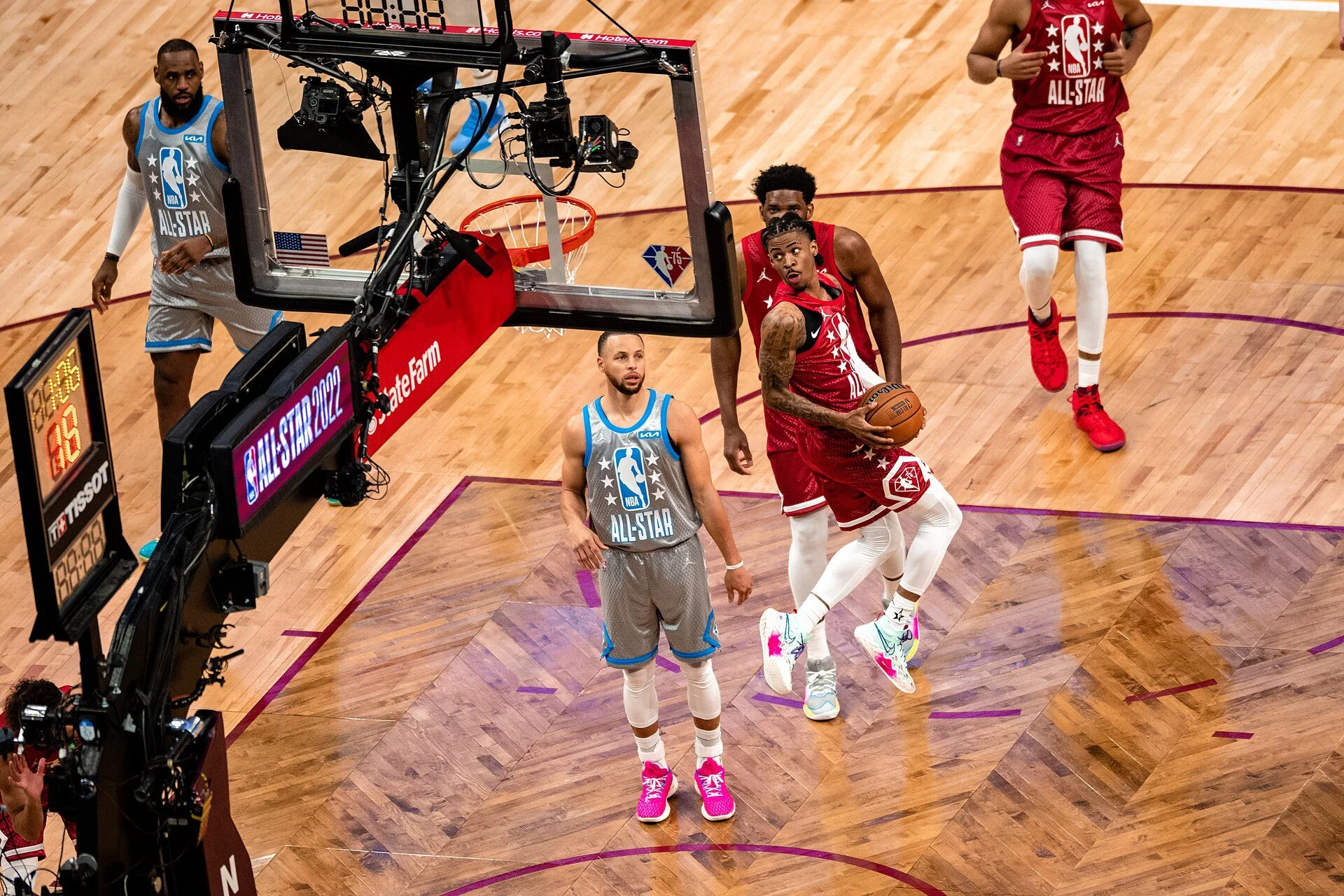
Philadelphia has assembled a remarkable combination: LeBron James, Jaylen Brown, Tyrese Maxey and Joel Embiid, alongside emerging talent such as VJ Edgecombe.
The challenge isn't a lack of talent. It's coordinating it.
You may say that’s a luxurious problem to have… but has been the downfall of many a great team (on paper).
All four established stars have experience leading offences and taking responsibility in decisive moments. But only one player can have the ball at a time, and the team will need to balance individual strengths with collective priorities.
What happens when one player takes the decisive shot and misses? When another feels underused? Or when the team loses a big game and questions about leadership begin to surface?
The Psychology:
Role clarity, shared leadership and the willingness to sacrifice
Research on team roles suggests that clarity around responsibilities helps reduce uncertainty and role conflict. Meanwhile, effective teams can distribute leadership rather than relying on one person to lead every situation.
Watch for three things:
Role acceptance: Can players buy into responsibilities that don't always maximise their individual statistics?
Flexible leadership: Can LeBron organise one possession, Maxey take charge of another and Embiid or Brown become the focal point when the situation demands it?
Attribution after failure: When something goes wrong, do players take collective responsibility, or does blame become attached to individual decisions?
Crucially, roles shouldn't be rigid. They need to be clear enough to create trust, but flexible enough to respond to match-ups, form and the demands of a particular game.
The performance takeaway: Agree on what success looks like, how decisions will be made and what sacrifice means before adversity arrives.
The key question: can four players who are accustomed to leading create a team where leadership is shared rather than contested?
Erik Drost, CC BY 2.0 <https://creativecommons.org/licenses/by/2.0>, via Wikimedia Commons
Ja Morant: New City, New Beginning, Return to his Best?
Ja Morant has moved from Memphis to Portland, creating a new chapter for a player whose extraordinary talent has been accompanied by injuries and off-court controversy. He joins a Portland backcourt that includes Damian Lillard, Jrue Holiday and Scoot Henderson.
A change of environment can create distance from established routines, social expectations and a narrative that has become difficult to escape.
But a new city doesn't automatically create new habits. Morant will need to navigate a new team, new expectations and potentially explore a different competitive identity… while learning from experienced players such as Lillard and Holiday.
The Psychology:
Identity change requires more than a fresh start
Psychological research on identity and behaviour suggests that changing environments can disrupt familiar cues and routines, creating opportunities to develop new patterns. However, sustained change usually requires deliberate action, supportive relationships and accountability.
Watch for three things:
Identity: Does Morant begin to define himself through the player and teammate he wants to become, rather than being governed by his previous reputation?
Daily behaviours: Do changes show up in preparation, recovery, communication, decision-making and consistency — not just in performances on game night?
Mentorship and accountability: Can he learn from veterans without becoming dependent on them to regulate his behaviour or make decisions for him?
The distinction matters: a fresh start is an opportunity, not evidence that change has already happened.
The performance takeaway: You can't always control your history or how others see you. You can start building a different story through the behaviours you repeat today.
The key question: will a new environment create the conditions for change, and will Morant do the work to sustain it?
We will have to see how each of these play out across the coming season, and that is the most exciting part. The journey each of these athletes and teams will take will be full of unpredictability, setbacks, triumphs and moments of pure emotion. That is what makes sport so incredible… we can never know exactly what will happen.
Regardless, I hope that this article gives some points of reflection and some useful areas to watch as the NBA tips off.
My prediction for who will win the championship? Well… I’m a Timberwolves fan so I will certainly be rooting for an Ant Man x Melo super link up that takes us all the way to a first championship win!
Thank you for reading and have a great week…
Frazer
References:
Bandura, A. (1997). Self-efficacy: The exercise of control. W. H. Freeman.
Beauchamp, M. R., & Eys, M. A. (Eds.). (2014). Group dynamics in exercise and sport psychology: Contemporary themes (2nd ed.). Routledge.
Carron, A. V., Colman, M. M., Wheeler, J., & Stevens, D. (2002). Cohesion and performance in sport: A meta-analysis. Journal of Sport and Exercise Psychology, 24(2), 168–188.
Eccles, D. W., & Tenenbaum, G. (2004). Why an expert team is more than a team of experts: A social-cognitive conceptualization of team coordination and communication in sport. Journal of Sport and Exercise Psychology, 26(4), 542–560.
Eys, M. A., Carron, A. V., Bray, S. R., & Beauchamp, M. R. (2005). The relationship between role ambiguity and task cohesion in sport teams. Small Group Research, 36(3), 356–373.
Gardner, F. L., & Moore, Z. E. (2007). The psychology of enhancing human performance: The mindfulness-acceptance-commitment approach. Springer Publishing Company.
Hatzigeorgiadis, A., Zourbanos, N., Galanis, E., & Theodorakis, Y. (2011). Self-talk and sports performance: A meta-analysis. Perspectives on Psychological Science, 6(4), 348–356.
Hogg, M. A. (2001). A social identity theory of leadership. Personality and Social Psychology Review, 5(3), 184–200.
Prochaska, J. O., & DiClemente, C. C. (1983). Stages and processes of self-change of smoking: Toward an integrative model of change. Journal of Consulting and Clinical Psychology, 51(3), 390–395.
Wood, W., & Neal, D. T. (2007). A new look at habits and the habit-goal interface. Psychological Review, 114(4), 843–863.
NBA examples and reporting
Associated Press. (2026, July 14). Wolves hope LaMelo Ball's arrival will elevate their entire team. NBA.com.
National Basketball Association. (2026, September 22). 2026–27 season preview: Philadelphia 76ers. NBA.com.
National Basketball Association. (2026, June 30). Trail Blazers add Ja Morant in trade with Grizzlies. NBA.com.
Vorkunov, M. (2026, October 12). Chris Finch on the addition of LaMelo Ball: “We've traded moodiness for giddiness”. HoopsHype.
Athlete examples
These NBA storylines contextualise and illustrate the psychological concepts rather than serving as empirical evidence that the proposed mechanisms caused particular team or player outcomes. The academic literature supports the broader principles of team cohesion, role clarity, shared leadership, identity and behavioural change.
