

Nadal: Mindset Learnings from the Tennis Great
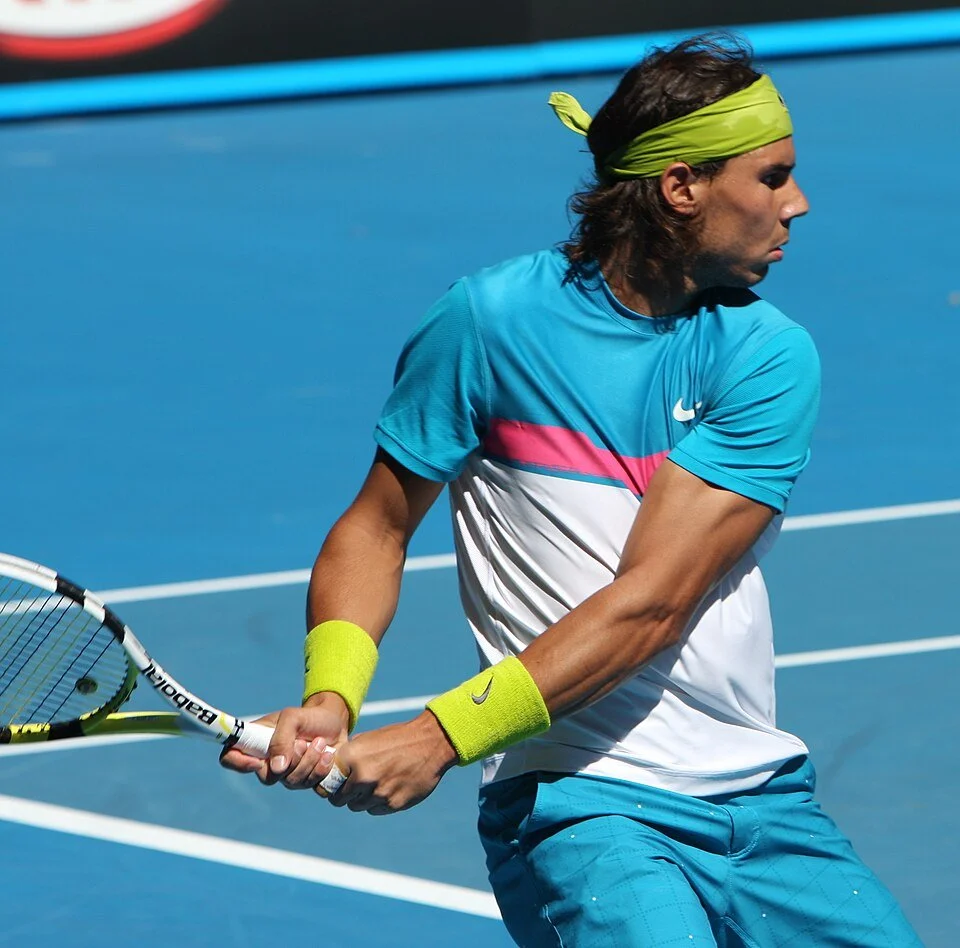
Tekijä: Brett Marlow - IMG_0886, CC BY 2.0, https://commons.wikimedia.org/w/index.php?curid=5798741
22 Grand Slam titles, 14 time French Open winner, 2 Olympic Gold Medals, 4 Davis Cups, and the Career Golden Slam (all 4 majors and an Olympic Gold), Nadal is undoubtedly one of the greatest tennis players of all time. A beast on the court, known for his relentless energy and physicality, combined with a cool head and ability to execute strategic shots under intense pressure. Nadal has always appeared to me like a man immune to fear and self-doubt. I remember when I first watched Nadal, in his 2008 victory over Roger Federer at Wimbledon, to me he seemed like tennis’s answer to Hercules!
So, you can imagine my delight when Netflix recently released a 4 part series (“Rafa”) exploring the life and career of this tennis behemoth.
The series allows an insight into Nadal’s upbringing in his home town of Manacor, outlining his close relationship with his family (an essential pillar for Nadal’s success), the challenges he faced training with his Uncle Toni from a young age and ultimately tracking his ascension to the rafters as one of Tennis’s all time greats.
The sad reality is, that I can’t watch a docuseries like this without filtering it through the lens of performance psychology (I promise I have a life beyond my job). So in this post, I will outline the primary learning I took away from this series…
Pain is inevitable, suffering is optional
Perhaps the most startling fact outlined in the documentary is that from the age of 19 onwards, Nadal has been managing chronic, intense foot pain. The cause of which being Mueller-Weiss syndrome, a rare, progressive, degenerative disorder of the navicular bone in the foot.
For many, this would spell the end of their career. An incurable foot condition that causes excruciating pain, that is only going to get worse? That sounds utterly unbearable!
However, Nadal did not take this as a stop sign, and instead looked to find a path that would allow him to continue chasing his dreams. The answer? Some specialised insoles which, although not a cure, allowed Nadal to play with a tolerable level of pain. The knock on effect of this was career long tendonitis issues, which caused withdrawals from major tournaments and contributed to periods of struggle.
He could have given up. He could have said, no… this is not worth it. He could have chosen another path, one that with his personality and drive, he could have been successful with. However, this was not the person that Rafa wanted to be. He knew what he wanted, and that was to achieve his potential on the court. So he doubled down, he accepted that the pain was part of his story, and he continued his ascension to the top.
The learning I have taken away from this links into a lesson from Steven C Hayes, the founder of Acceptance and Commitment Therapy. Hayes acknowledges that life is not all sunshine and rainbows, to pursue a life free from all pain is to risk a life that will ultimately be devoid of deeper meaning. This rings true in every day life just as it does in the world of elite sport. To achieve the extraordinary, we must accept that within this journey there will be sacrifice, there will be suffering and there will be pain. It is up to us to determine whether this pain is worth it.
Say you want to score the most goals in your league this season, you must risk missing some shots, losing possession or being subject to a crunching defensive tackle. Or, say you want to be the captain of your team, you may have to take on difficult conversations with coaches and players, speak up with confidence when you yourself are feeling anxious or make decisions that leave you open to critique. These roles and responsibilities may be uncomfortable, they may be painful, but in order to achieve your ambitions, they are part of the journey.
Now, I must make this very clear (so no one sues me and I don’t get any angry comments saying I am encouraging harm!), do not continue to play your sport if you are injured, and do not continue to push through a challenging period unsupported if you are struggling with your mental wellbeing. The other side of Nadal’s story, which is critical to acknowledge, is that he had a team of elite medical professionals helping him to manage his condition and an exceptionally tight knit family unit that would do anything they could to protect and care for him.
What I am saying though, is that when we accept that pain and discomfort are at times part of living a fulfilling life, we can learn to approach challenges, confident that risking pain or facing it head on, may just unlock the door to deep, meaningful progress.
What are you willing to endure in the pursuit of your dreams?
I hope that reflection is somewhat useful to you, albeit the final question may not be the most fun one to meditate on!
In writing this, my aim is simply to outline that you are capable of enduring struggle and challenge, and that doing so and reaping the rewards, will likely make you all the more proud of your progress and achievements (although I can certainly understand if you think, “this Frazer chap sounds like a real d***head”, at points writing this, I was thinking the same thing too!).
Thank you for reading and have an amazing week.
Frazer
