

Trail Running Mindset: Ultra Running Philosophers
This weekend, we might witness history…
An all-star ensemble of trail running greats is about to embark on the Western States Endurance Run, the unofficial North American trail running championship.
From the great Jim Walmsley, the legendary Kilian Jornet and defending champion Abby Hall, to the next generation of ultra-endurance athletes, including Molly Seidel and Hans Troyer, there is a wealth of world-class talent on display.
Now, in ultra trail running, like many endurance sports, the mindsets of these elite athletes fascinate me.
So, in honour of this great event, I have compiled a list of some of my biggest learnings from listening to these incredible athletes outline the performance mindsets that power them to the seemingly unimaginable…
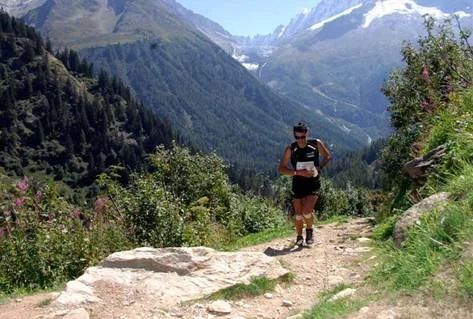
Par Pierre Thomas — Salomon, CC BY-SA 4.0, https://commons.wikimedia.org/w/index.php?curid=5201941
Kilian Jornet: Choose Adventure
Kilian is widely considered the GOAT of trail running, but he is so much more than that. An entrepreneur with his brand NNormal, an explorer taking on mammoth endurance feats such as his 2024 Alpine Connections challenge (linking all 82 Alpine peaks over 4,000m by human power), a philanthropist through the Kilian Jornet Foundation, and a father of three, amongst many other roles!
I could be here all day listing his achievements.
However, my major learning…
Choose adventure.
By this I mean consciously choosing to challenge ourselves and try new things.
Often, we become creatures of habit (and that is not always a bad thing if we have great, helpful habits!). However, when we want to make meaningful change in our lives, or go after a big goal, being prepared to get uncomfortable is a major asset.
To change, we have to try something new.
Our brain, which wants to keep us safe, does not always like things that are unfamiliar or uncertain. New experiences, that it cannot yet be sure are safe, often feel threatening. This is why we come up with excuses and reasons not to do things.
Our brain is trying to help us survive, but in doing so it can sometimes limit our capacity to thrive.
But if we only ever stay in our comfort zone, that comfort zone remains small… and everything outside of it feels scary.
By choosing to expose ourselves to new experiences, our comfort zone can expand as our brain learns that new things are not always bad—they can actually be good for us.
Now, by "choose adventure" I don't mean summiting 82 peaks over 4,000 metres in the Alps. That is the extreme expression of this message.
What I mean is that there are benefits to choosing small adventures in your everyday life. Ones that require you to step just a little outside your comfort zone.
By doing this, not only will you gather new experiences and expand your comfort zone in the process, but you will also prove to yourself that even if something feels a little scary, you can still choose to do it anyway.
What is one mini-adventure that you could choose today?
David Roche: Love the Challenge
David Roche is a sport scientist and endurance performance mastermind. A major advocate for high-carbohydrate fuelling, purposeful downhill running, and the critical importance of running economy, David continually pushes the envelope—not only with his own performances, but also through his coaching and the Some Work, All Play podcast, which he hosts alongside his wife, Megan.
David is also brilliant at finding practical ways to apply performance psychology.
One example that really stood out to me is how David leans into discomfort, reframing it as the very reason he is training.
David is a big advocate of very intense and challenging training sessions. Lots of hard uphill running and pounding the downhills.
These sessions hurt.
But David knows that this is exactly why he is doing the work.
Races hurt.
But instead of fighting the pain, pushing back and telling it to shut up, David welcomes it. He even talks about showing love to the pain, recognising that it is his brain signalling that he is pushing beyond what it currently perceives to be comfortable or sustainable.
This marries up beautifully with other evidence-based emotional regulation techniques.
For example, Acceptance and Commitment Therapy expert Russ Harris often talks about "thanking the mind."
Your brain constantly gives you signals. Feedback that your thinking mind then interprets. Ultimately, you assign the meaning to those feelings.
During a hard session, if you are not used to that level of discomfort, your mind might scream:
"STOP! WHAT THE F**K ARE YOU DOING?! YOU'RE GOING TO DIE!"
Not especially helpful if improvement lies on the other side of that discomfort…
If you fight back, this can absolutely work in the moment, and you may still get through the session. However, it can also be exhausting and, over time, may reduce your enjoyment of the activity.
Very few people enjoy spending 30 to 60 minutes utterly flogging themselves whilst hating every second.
By switching our perspective, thanking the brain for providing useful feedback that we are working hard, and reframing that discomfort as being the very reason we are here…
This pain is the start of the progress.
We are able to treat ourselves with greater kindness and compassion, which is far more conducive to long-term enjoyment and consistency.
The feedback remains the same, but we are now soothing the mind, welcoming its feedback, while reassuring ourselves that we are okay and will get through this.
Courtney Dauwalter: Be Present
Like Kilian, Courtney sits firmly on trail running's Mount Rushmore. One of her most remarkable achievements (amongst many) is becoming the first person to win the Western States 100, Hardrock 100 and UTMB in the same year (2023). An incredible achievement by an incredible person!
Luckily for us, Courtney has spoken on many podcasts and featured in numerous films and interviews, giving us a small insight into her mindset.
A takeaway that may be useful…
Be present.
Courtney doesn't get too far ahead of herself or allow herself to become stuck in the past.
Of course, there are times for mental time travel. We need to recall past experiences to learn from them and project into the future so we can prepare for what lies ahead.
However, spending too much time there can leave us anxious, distracted and unable to focus on what really matters in the present moment.
Courtney has spoken about using simple present-moment skills, such as focusing on her breathing and the next step, to keep herself anchored in the here and now.
Instead of becoming overwhelmed by the thought of tackling 100 miles or more, or ruminating on everything that could go wrong, Courtney breaks the race down and tackles it one step at a time until she eventually crosses the finish line.
It's worked out pretty well for her!
This is a skill we can all apply in our own lives. At work, at home or with friends, our minds are constantly looking ahead, reflecting on the past and trying to keep us safe. But if we spend too much time inside our heads, we can miss connecting with the people around us and truly appreciating the experiences unfolding in front of us—a great meal, a stunning view or a meaningful conversation.
Some simple ways to stay present include noticing what we can see, hear, feel, smell or taste, becoming aware of our breathing, and focusing on our very next action rather than what might happen five minutes from now.
So…
What are two things you can hear?
And two things you can see?
Now, I could continue this list…
But UTMB is coming up soon too, and I'd like to save a few more reflections from the ultra-running philosophers until then!
Good luck to everyone racing Western States, I cannot wait to watch the livestream and soak up the interviews on the Single Track and Free Trail podcasts (I highly, highly recommend!).
Thank you for reading this far today, and stay tuned for the UTMB edition coming soon.
Thank you very much, and have a great week,
Frazer
